Clrs. cry poor

Paucity of achievement perhaps?

Crying dollarsWilloughby Councilors are in a tizz. The Local Government Renumeration Tribunal has advised them that their pay will be cut by around 20% per annum.

Willoughby has been reclassified as a ‘small’ city. The classification is based on the size of the population, total revenue and the provision of regional services.

Many Councillors have stated that ‘we do not do it for the money’, yet the decision to protest the cuts to the State Government was unanimous.

Let’s hope we do not see Councilors approving more development applications that increase population and generate revenue.

The aspect of providing regional services is interesting, Willoughby certainly get a tick for health (RNSH), retail and cultural facilities (The Concourse). However, these were achievements of previous Councils, not his one. The current Council, in its unique wisdom, decided to depart from one of the most successful Council collaboration initiatives on the North Shore – the Shorelink library network.

When council amalgamations were announced, Willoughby Council was advised that it did not meet the scale criteria, so there should be no surprise that it has been judged wanting on a number of fronts.

However, there are other disappointing aspects of this Council’s performance. Attendance at Council meetings:

Over the past two years, one Councilor has skipped 52% of meetings; two have skipped 30% and two have skipped 27%; 25% one and  23% one. There are 12 Councilors, six of them have skipped over 20% of meetings. Looks like everyone will pay for the ‘sins’ of some.

The Mayor on the other hand has attended every meeting (as well has hundreds of community events). Unfortunately, she is hit the hardest by the pay cuts.

In West Ward, we have been particularly underrepresented at meetings. Clr Saville has only missed 2 meetings. Our other representatives missed 52% and 27%.

You can access the Councillor Attendance Registers HERE

Metro update

MetroSouthDemolition of buildings at key sites is currently being prepared.  This includes the Chatswood Dive Site (old Ausgrid Site at the corner of Mowbray Rd and the Pacific Highway).  Current plan is to commence demolition around mid-May at key locations where new stations (& the Chatswood Dive Site) are to be located.
Underground utility is being located as geotech investigations continue along the Metro route.

Feedback about heritage issues are now being collated; and an “Unexpected Finds Plan” is nearing completion

The heritage team is recording all ‘salvageable items’, including movable heritage item such as a steam carpet cleaner.  Other items being archived include entire ‘art deco’ items from old buildings being demolished to accommodate the new stations.  An exhibition of these items are currently being considered.

Sustainability issues are being addressed through the listing of initiatives that account for Climate Change, resource management, people and communities.  Some initiatives of interest include the following:

□             All underground stations will aim to achieve 5 star Green Star rating.

□             100% reuse of spoil

□             33% of water will be from reusable sources

□             95% of construction waste will be reused

□             Affordable housing being considered particularly over new stations

□             TfNSW will be working with the City of Sydney to rehouse the homeless

Officers from Willoughby Council recently attended a meeting (2 May) and raised the issue of our community’s concerns about noise and dust when work begins at the Chatswood Dive Site and conveyed the request that Willoughby is still waiting for a response regarding the setting up of a community liaison group so that Willoughby’s community will be able to provide feedback on the effectiveness of TfNSW’s noise and dust mitigation initiatives.  A response to that request is still being considered by TfNSW.


High rise school in Chatswood?

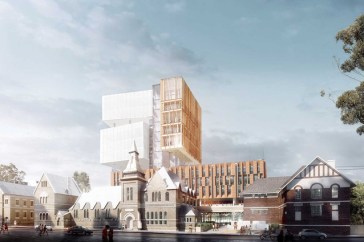
High Rise school on heritage site

New high-rise school, Alexandria. Will Chatswood Public be next?

The NSW state government has announced a $5b plan to tackle the overcrowding crisis in NSW schools. This will be undertaken by a new agency to be known as Education Infrastructure NSW. The following is a summary of the new strategy.

2017 School infrastructure initiative (Education Infrastructure NSW)

The NSW government has announced a bold $5 billion plan over 10 years to address chronic overcrowding in NSW schools. The details are contained in a new Cabinet-in-Confidence School Assets Strategic Plan. There will be an average of $500 million a year spend

Maximum enrolments for school will increase from 640 to 1,000 for primary schools and from 1,900 to 2,000 for secondary schools.

There is also a proposal that there be a standard of 10 sq.m per student of play space. For a 1,000 student school this would equate to 10,000 sq.m of play space. To put that in context, a medium size house block is around 500 sq.m, So we would be talking about 20 house blocks (or 40 for a high school) toprovide for planned play spaces.

The government has given an undertaking that it will not increase class sizes.

37% of school are effectively completely utilized.

5% of schools (180) are over capacity.

There are suggestions that there be more joint venture between developers and councils of joint and shared school assets. An example might be a sports facility used by the community after hours and run by a not-for-profit organization.

They say that the old 60s model of a school plonked in the middle of a block of land is not going to work any more.

Growth is projected at 21% over the next 15 years. There is a projection of an additional 164,000 new students by 2031

There will be ‘modular’ classrooms instead of demountables.

The department has stated that where land value is at a premium, they will build high-rise schools rather than purchase additional land.

SOME IMPLICATIONS

There may be a number of implications of the new strategy:

  • The comments relating to land value of surrounding properties would likely apply to Chatswood Public School (CPS)
  • It is difficult to understand how the Department could provide 10,000 sq.m of play space for CPS students without land acquisition
  • It is difficult to understand how proposed developer partnerships might work. A developer would likely only become involved with a school where there was an opportunity for development (most likely residential). So this might see the redevelopment of an existing school to high rise residential and high rise educational facilities.
  • School/Council partnerships have worked successfully at CHS, WPS and Willoughby PS/WGHS. No doubt, similar arrangements could be put in place if CPS had more play space.
  • The CPS site is somewhat constrained by the existence of heritage listed school buildings meaning lesson-site development potential
  • How do you redevelop and existing school site such as CPS whilst maintaining an appropriate learning environment for students. MPS was fortunate, being a relatively small school (less than 500 pupils) to be able to vacate existing classroom to demountables within the school grounds whilst the new 3 storey, 1,000 student school was constructed. The same opportunity does not exist at CPS (unless there is major land acquisition).

Child care – Dalrymple Ave

A DEVELOPMENT APPLICATION HAS BEEN LODGED FOR THE EXTENSION OF OPERATING HOURS TO EXISTING PRE-SCHOOL CENTRE FROM 8:00AM UNTIL 3:30PM TO 8:00AM UNTIL 5PM, AND EXTEND OPERATIONAL PERIOD TO 50 WEEKS PER YEAR.

DalrympleChildCareThe application was widely notified to surrounding properties. Four submissions were received. The issues raised were:

  • the existing centre causes traffic and parking issues,
  • the children who attend the centre cause noise that disturbs neighbours,
  • the activities of the children affect the serenity of Campbell Park,
  • any extension to the hours of operation will aggravate an already unacceptable situation, and
  • there is an oversupply of child care centres.

After considering the application and submissions, the Council Officer is recommending approval with the following conditions:

SCHEDULE OF CONDITIONS

1. Hours of Operation: The hours of operation of the child care centre are to be restricted to those times listed below, i.e.: Weekdays 8.00am to 5.00pm The use of the premises for the operation of the child care centre are restricted to weekdays for a total of 50 weeks per year. Any variation to these hours is to be subject to the prior consent of Council. (Reason: Amenity)

2. Scheduling the Collection of Children: The collection of children from the centre must be scheduled so that a maximum of ten children are scheduled for collection in any 30 minute period from 3.30pm until 5.00pm in order to avoid a peak collection period. (Reason: Traffic and Parking)

Exciting new exhibition

Invitation2

Our new exhibition at Willoughby Museum for the National Trust Heritage Festival, Artistic Voices, will be opened by Mayor Gail Giles-Gidney on Sunday 23 April at 2pm.

Curated by Terry Fogarty, it will showcase some 100 individuals who have contributed to the long and rich heritage of artistic endeavours that reflect the cultural diversity of Willoughby City. Their contributions cover a variety of artistic fields, as artists, architects, actors, writers, playwrights, poets, singers, dancers, musicians, photographers, sculptors, puppeteers, film producers or radio or television personalities. The exhibition will tell the stories of these notables through large panels and smaller profiles of their key achievements, backed by artefacts from our museum collection, both in the main exhibition room and elsewhere at the museum. We look forward to your next visit to the museum to take in this extensive exhibition with the assistance of our guides.

The museum will be open from 1pm to 4pm on Thursdays and Sundays for this exhibition from 23 April to the end of May and Sunday afternoons thereafter.


Chatswood Central

ChatswoodCentralChatswood Central (1-6 Railway St, Chatswood) is up for sale.
Being located along the western side of the Chatswood train station this is a strategic site within the Chatswood CBD. It potentially offers scope to expand the Chatswood Interchange.


The Association is working with Willoughby Council and the Federation of Willoughby Progress Associations to bring this potential to the notice of State and Federal politicians.

Chatswood Central For Sale Brochure

Currey Park

Currey Park is on the site of a prior orchard. It is named after Henry Currey, a Chatswood resident and prospector. In 1897 Henry subdivided and sold his land on the corner of Victor Street and Albert Avenue to finance his mining ventures, and dedicated Tingha Street to Council. Tingha is a tin mining town south of Inverell, NSW.

The park was created in response to the increasing development within the Chatswood CBD, so was a less then optimal configuration and location for a park.

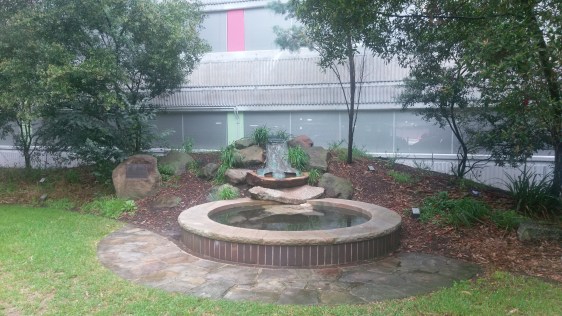
The park’s link to the town of Tingha is marked by artist Joe Hurst’s fountain and sculpture of Tingha Woman. The Tingha Woman story is written on a plaque next to the fountain:

IMAG0133

The Willoughby-Bingara Friendly City Commemorative Garden commemorates a decade (1995 – 2005) of the Friendly City relationship between Willoughby City Council and the township of Bingara in northern NSW. The garden is dedicated to the former Mayor of Willoughby, John Squire for his dedication to the Willoughby and Bingara communities, and contains plants indigenous to Bingara and Willoughby.

IMAG0131

There is also a wooden of an octopus sculpture in the park.

IMAG0126

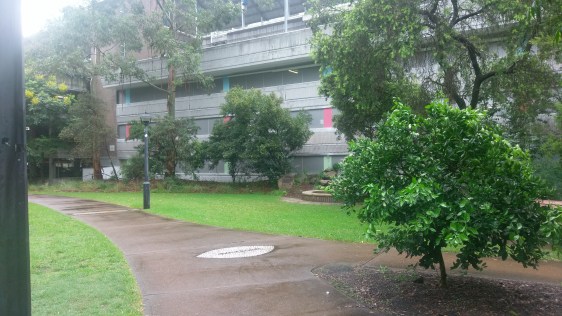
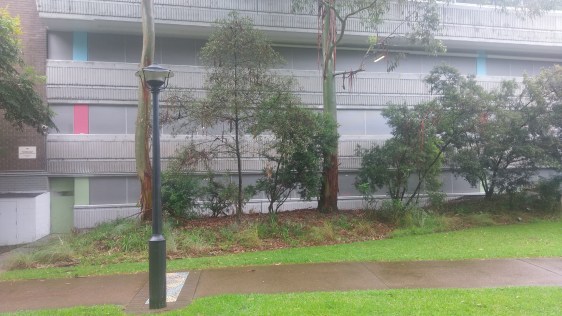
The park runs parallel to the Westfield carpark then does a dog-leg around to Tingha Street.

IMAG0130

Mature trees (either on Council operational land or Tingha Park) have been planted in front of the carpark (presumably to provide some visual and acoustic amenity). There is a path through the centre of the park with some mosaic inlay and a number of wooden benches.

IMAG0136

Some time ago, Scentre (Westfield) sought approval to extend a portion of the carpark to the east. It appears that there may have been some problems with notifying local residents. Approval was given for the work. Due to the location of the works, a number of trees had to be removed and a worksite was established (with consent) partly within the park. There was some damage to various features of the park. Residents were promised that new trees would replace old and that any damage would be remedied. The main ongoing issues for residents is that now the edge of the carpark is further to the east there is a greater intrusion from vehicles (both noise and light spill.

The vegetation cover in front of the new addition is not yet as dense as in front of other faces of the carpark; This should improve as the trees grow.

IMAG0135

In particular, the wall face behind the Tingha Fountain is quite stark. This is likely because there is insufficient width behind the fountain to plant trees.

IMAG0133

There are other sections of the park that are quite picturesque.

 And some sections not so nice.

IMAG0127


Housing strategy

WE support the submission of the Federation of Willoughby Progress Associations:

Willoughby City Council Housing Strategy

  1. Are 2016 Dwellings Estimates for Willoughby Accurate? The 2011 census showed Willoughby LGA as having 26,720 private dwellings, and the 2010 Sydney Metro Strategy and revised strategy in 2012 gave Willoughby LGA a 21 year target of close to 7,000 additional dwellings through infill development. It has been previously indicated that Willoughby LGA exceeded its 7,000 target within 6 years (ie by 2016).


Whilst we await the 2016 ABS Census figures on new dwellings, it is noted that page 9 of the strategy estimates that there are only approximately 28,000 dwellings in the LGA in 2016, only 1280 more than 2011.  How can we have exceeded our targets for a 7,000 increase in dwellings  in 6 years and yet only have increased total dwellings by only 1,280 residences since 2011? This discrepancy needs to be reconciled.


Whether the increase has been 7,000+ or only 1,280 additional dwellings to 2016, the impacts on local infrastructure of this increase has already been very significant. In addition, some of our road and transport infrastructure also bears the brunt of the increased population from the mandatory increases in dwellings in Northern Beaches, Upper North Shore and Central Coast LGAs as well.


  1. The Proposed Growth in residential dwellings is not sustainable: It is noted that an additional 6,450- 6750 dwellings being proposed between 2016-2036. Enough is enough. What is proposed is not sustainable development. The existing road, school, active recreation space and transport infrastructure are already at or well exceeding capacity, with no plans or ability to increase much of this infrastructure, and the capacity of other necessary services and infrastructure like sewers, electricity and gas has a limit.


Major road routes through the area are insufficient to cope. Eastern Valley way channels huge amounts of peak hour traffic into one lane each way on the Suspension Bridge at Northbridge, The Pacific Highway at Chatswood has been recognised as being very slow, and likewise for Penshurst St, Mowbray Rd and Fullers Road.  The major route from the Northern Beaches through to Ryde and Parramatta is not direct (Boundary/Highway/Fullers Rd/Delhi Rd) and parts are also one lane local traffic roads. Likewise Chatswood traffic is often gridlocked at weekends. Some buses are already so full in peak hour by the time they get to Small St Willoughby and Naremburn they don’t pick anyone up at these stops.  The capacity issues in our public schools continue to increase despite significant capital works funding in recent years.


  1. The proposed amount development is contrary to the stated design principles as it is of a magnitude that will ruin the heritage and environmental qualities of the area: One of the unpinning design principles of the Strategy is indicated to be to ‘Respect and promote the heritage and environmental qualities of WCC in planning for new housing’. Cutting into our existing heritage conservation areas, and also pulling down many buildings and trees and replacing them with medium rise and high rise is completely contrary to one of the stated design principles of this housing strategy.


  1. Heritage Conservation areas must be excluded from rezoning and development: It is noted that most of the areas that have been identified for investigation for development potential for medium and high density development on pages 23-29 include existing protected heritage conservation areas. These areas were developed with community consultation and were areas designed to protect and retain the valued neighbourhood attributes of our local community and village centres. The Federation of Willoughby Progress Associations is opposed to any existing heritage conservation areas being investigated or rezoned for the purposes of high rise or medium development.

How will putting significant development around these town centres meet the design principle of  ’protect the valued neighbourhood attributes of our local community’?

  1. Proposed Growth is so excessive it will destroy the existing qualities of the Willoughby: It is stated in a strategy that there is a need to balance demand for residential development and retain valued neighbourhood attributes into the future.


Our community has already experienced significant development over the last 7 years, and whilst there is demand, Council should also be putting a limit on development to ensure it is sustainable. As indicated above, it is unlikely that another 6,500 or so increase in new dwellings will be sustainable, given the existing capacity issues of local roads, schools and playing fields and the destruction of trees and greenery.  This amount of development will destroy the existing valued neighbourhood attributes in many parts of the LGA. Just because there is high demand does not mean we have to keep supplying.


  1. Unoccupied Dwellings and Demand from International Buyers: We note that the 2011 census figures indicated approximately 2,000 unoccupied dwellings in the Willoughby LGA area. Rather than additional significant development, it would be better to focus on strategies to reduce vacant dwellings in the area through strategies that have been successful in other jurisdictions like a vacancy tax and preventing international buyers contributing to the high demand, rather than squashing in more unsustainable development. Only a small number of other overseas countries allow overseas buyers.


  1. No Benefit in Council Setting High Targets for Growth and Meeting them Early: Willoughby Council was one of the first Councils in Sydney to meet its 21 year Sydney Metropolitan Strategy target to 2031 for additional dwellings, within 6 years, and has now exceeded this target. The Greater Sydney Commission is requiring Willoughby LGA to have 1,250 additional dwellings by 2021. By meeting our State set growth targets early our community is disadvantaged because a few years later additional limits are imposed.


Stephanie Croft

President, Federation of Willoughby Progress Associations

GSC – District North Plan

We are generally in support of the position taken by the Federation of Willoughby Progress Associations with the following exceptions:

9. We believe the heading should include the words that relieves the current impact on the Willoughby LGA. The issue ofa new connection to the Peninsula has been contentious for decades and one that needs wider discussion.
10. We cannot support this clause. It is unclear what arguments are being promoted or on what basis. Again, this is a highly contentious issue that would need further discourse before an agreed position could be reached.
11. the heading should include and areas and tracks associated with the Lane Cove River.
n relation to the GSC North District Plan submission, I have a number of concerns/reques
9. I believe the heading should include the words that relieves the current impact on the Willoughby LGA. The issue ofa new connection to the Peninsula has been contentious for decades and one that needs wider discussion.
10. I cannot support this clause. It is unclear what arguments are being promoted or on what basis. Again, this is a highly contentious issue that would need further discourse before an agreed position could be reached.
11. the heading should include and areas and tracks associated with the Lane Cove River.


Federation of Willoughby Progress Associations: Greater Sydney Commission Draft Sydney North Plan Submission

  1. The Federation of Willoughby Progress Associations supports that a 20 year integrated plan with a 40 year vision for Sydney is being developed, and that the Greater Sydney Commission (GSC) is co-ordinating development of these plans across Government Agencies and Local Government Areas, rather than lots of separate plans for the same area prepared in different planning silos for different aspects and time periods.


  1. Authentic Community Consultation needed for additional development work: It is noted that the Sydney North draft plan indicates that there is a considerable amount of additional work to be undertaken by GSC and Councils and other Government Agencies. It is very important that there is authentic Community Involvement and consultation in this additional work.


  1. The Proposed Growth in residential dwellings is not sustainable as existing infrastructure is already insufficient for existing population: Willoughby alone has had significant growth since 2010 due to the Sydney Metropolitan strategy. It is noted that an additional 6,450- 6750 dwellings being proposed for Willoughby LGA alone between 2016-2036. Enough is enough. What is proposed is not sustainable development. The existing road, school, active recreation space and transport infrastructure are already at or well exceeding capacity, with no plans or ability to increase much of this infrastructure, and the capacity of other necessary services and infrastructure like sewers, electricity and gas has a limit.


Major road routes through the area are insufficient to cope. Eastern Valley way channels huge amounts of peak hour traffic into one lane each way on the Suspension Bridge at Northbridge, The Pacific Highway at Chatswood has been recognised as being very slow, and likewise for Penshurst St, Mowbray Rd and Fullers Road.  The major route from the Northern Beaches through to Ryde and Parramatta is not direct (Boundary/Highway/Fullers Rd/Delhi Rd) and parts are also one lane local traffic roads. Likewise Chatswood traffic is often gridlocked at weekends. Some buses are already so full in peak hour by the time they get to Small St Willoughby and Naremburn they don’t pick anyone up at these stops.  The capacity issues in our public schools continue to increase despite significant capital works funding in recent years.


It is noted that Willoughby Council was one of the first Councils in Sydney to meet its 21 year Sydney Metropolitan Strategy target to 2031 for additional dwellings, within 6 years, and we understand has now exceeded this target. The Greater Sydney Commission is requiring Willoughby LGA to have 1,250 additional dwellings by 2021 and significantly more by 2036. Our community should not be penalised with significant additional targets because it was supportive of the State Government’s Sydney Metropolitan Plan.


  1. The proposed amount development does not respect and promote the environmental and heritage qualities of the Willoughby area and is of a magnitude that will ruin them.


  1. Heritage Conservation areas must be excluded from rezoning and development: It is noted that most of the areas for investigation for development potential for medium and high density development that have been identified by Willoughby Council in its various Strategies to underpin the GSC Sydney North Plan include existing protected heritage conservation areas. These areas were developed with community consultation and were areas designed to protect and retain the valued neighbourhood attributes of our local community and village centres. The Federation of Willoughby Progress Associations is opposed to any existing heritage conservation areas being investigated or rezoned for the purposes of high rise or medium development.


Cutting into our existing heritage conservation areas, and pulling down many buildings and the tree canopy and replacing them with medium rise and high rise will destroy much of the ‘neighbourhood attributes’ that  people value about living in our area.


  1. Genuine housing choice that meets community needs is required not just lots of units: P15 Design Principle 1 on page 15 regarding increased housing choice around centres appears to be more about development numbers than housing choice  and appears to be a euphemism for ‘put in more high rise blocks of units’. There needs to be better choice for people from Northern Sydney seeking to downsize, however assuming that people will downsize from their large family homes with garden to a small studio apartment may be flawed. Many would prefer at least 2 bedrooms, and many would also prefer a town house or villa. The plan needs to provide for genuine housing choices and needs to provide for more townhouses/villas/terraces near to transport and services, and not just unit developments in those locations. Developer dollar and maximum population targets shouldn’t be the driving factor, there needs to be good, sustainable planning that will genuinely meet community needs.


  1. Chatswood’s commercial centre needs to be protected and encouraged for long term sustainability and viability of our area: commercial should not be forced out or replaced by residential development due to the economic cycle.


  1. Unoccupied Dwellings and Demand from International Buyers: We note that the 2011 census figures indicated approximately 2,000 unoccupied dwellings in the Willoughby LGA area. Rather than additional significant development, GSC should focus on strategies to reduce vacant dwellings in Sydney North through strategies that have been successful in other jurisdictions like a vacancy tax and preventing international buyers contributing to the high demand, rather than squashing in more unsustainable development. Only a small number of other overseas countries allow overseas buyers. Local residents have also indicated that there is a practice currently occurring where some of those marketing developments in Chatswood have told potential buyers that the building is only for particular ethnic group and others of all other nationalities including white Australians are not welcome to buy in them. Discriminatory practices like this need to be addressed so out. If the shoe had been on the other foot there would have been a public outcry.


  1. There needs to be proper road and rail access to the Northern Beaches: the lack of proper road and public transport infrastructure to the Northern Beaches is putting pressure on infrastructure in the lower North Shore too. For example, there is not a direct main route from the Northern Beaches to Ryde and Western Sydney, as the current route goes via Boundary Rd, the Pacific Highway, Fullers Road (which is one lane in parts) and Delhi Road, which is also one lane in parts. The one lane suspension Bridge at Northbridge is also a major thoroughfare, including from the Northern Beaches and upper North Shore, and is not sufficient for the current traffic volumes.


  1. Reducing car dependency is a good aspiration however it should not be forced through current practices of cutting car spaces in new developments to clearly inadequate levels or not allowing spaces for customer parking in new commercial developments as this is escalating existing parking and traffic problems in our LGA. There are not direct public transport options even within the LGA,  let alone to other parts of the city and some parts of our LGA do not have any public transport at all after the evening peak or on weekends. Our area is also quite hilly and the traffic is heavy and there is not sufficient off road cycleway infrastructure currently in place. For example a recent commercial and residential development in Northbridge was restricted by Council and not allowed to have sufficient car spaces for one per residential unit and even one for each of the commercial unit, when the commercial units required customer access. There should be no fanciful cuts in car spaces without better transport infrastructure and clear indications of change of community behaviour first. It is too late after the development is in.


  1. Middle Harbour Bushland areas and walking tracks are also important National Park and Reserve areas, and also could be considered for tourism potential.


  1. Housing affordability needs to be properly addressed. The massive increase in house prices in the lower North Shore may have a lag time but it will have an impact on our community for essential services and trades in the years to come.


  1. More Active Recreational Space is needed now: There is an urgent need for more active recreation spaces to be planned and provided for now There are not enough playing fields and netball courts etc. It will be too late once additional development occurs.


  1. Cycleways: There needs to be proper cycleway infrastructure planned for and installed. Northern Sydney has woeful integrated cycleway network compared to other parts of the Sydney region. There needs to be more than just lip service and paint lines on busy roads.


Local centres study

We support the Federation of Willoughby Progress Association’s submission with the clarification highlighted in bold:

Federation of Willoughby Progress Associations

Submission on Willoughby Council Strategy: Local Centres

  1. Existing Conservation areas should be protected: One of the Design principles of this strategy is to respect existing conservation areas and embrace heritage with growth however the Housing Strategy has identified some of the conservation areas for consideration for future development. The scale of proposed development is also significant and may alter the character of some of these local centres.
  2. Cycleway/Pedestrian infrastructure: There is mention of the importance of having walking and cycling infrastructure linking key destinations, however the cycling infrastructure in the lower North Shore is woeful. There needs to be proper planned, off road cycleway infrastructure, not precarious on-road routes through narrow busy and steep streets. Whilst parents walking and cycling with their children to school would reduce traffic on the road in peak hour, some local public schools do not allow cycling to school because of the dangers.
  3. No Local Centre for Chatswood West: The 5-7 centres that are planned are based around existing shopping strips or centres in the LGA. It is noted that there are none of these currently in the Chatswood West area, and given the huge number of residences, residents and development in this area, consideration should be given to facilitating a village centre or two across the Chatswood West Ward area west of the Pacific Highway. Particularly given the growth in population in the Mowbray Road area and the new library down there.
  4. Additional Infrastructure required: There needs to be additional infrastructure (road, transport, schooling, open space etc) before any new development occurs, as local infrastructure is already at stretch point before any additional new development. This has been discussed in more detail in FWPA’s other submissions
  5. Adequate Car Parking in new Developments: There needs to be adequate parking for residents, business owners and employees, and customers in any new developments around local centres. Whilst a number of the local centres have good public transport into the city, public transport to other parts of Willoughby LGA and Sydney are not easy. This needs to be addressed before car parking is restricted to try and reduce car use. Otherwise existing issues are aggravated.


Stephanie Croft

President, Federation of Willoughby Progress Associations